Showing posts with label Little Dudes. Show all posts

Thursday, April 29, 2010

Little Dudes: Spotted Bat (Euderma maculatum)

Michael Durham Photography has a plethora of great wildlife photos posted on his blog, which I encourage you to check out. This post with the Spotted Bat really caught my attention.

Here are some of the photos, click here for the rest. Oh and remember you can click on the photos to get bigger versions.


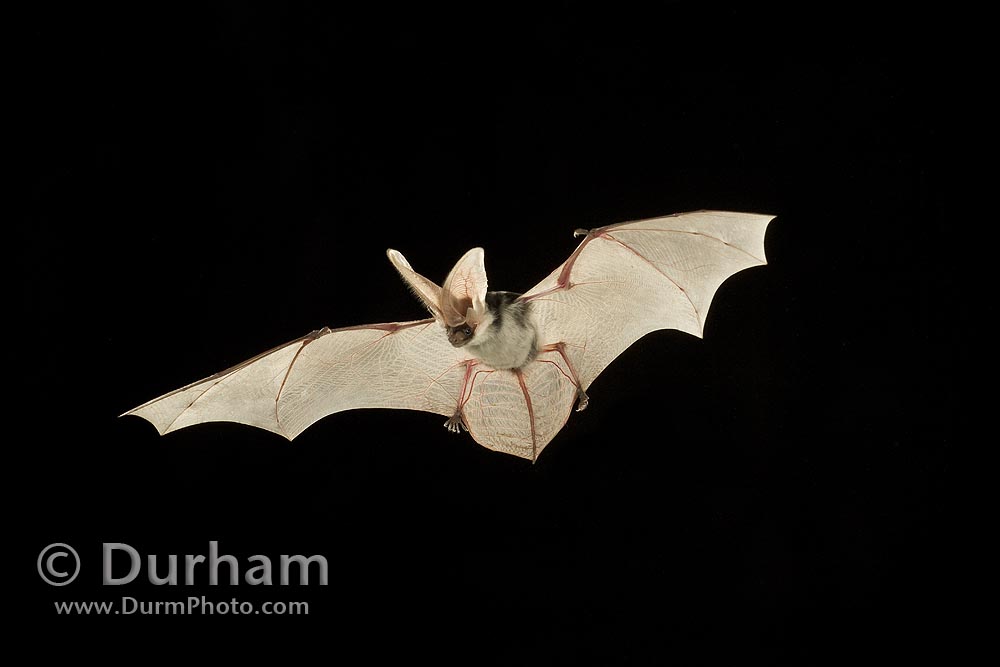


Enjoy little spotted furry flying dudes,

Bp

[all picture credits at Michael Durham's site]

Friday, July 3, 2009

Ant mega-colony takes over world


Ok, I lifted that blog title directly from the BBC Earth News article, but it was so awesome I felt I had to.

The Institute of Jurassic Technology does tend to talk about the whole invasive/non-native situation in biology. It's an interest of mine. So this article really caught my attention -- as Argentine Ants are spreading world-wide, reaping havoc on local bug populations, like the Reavers of the insect world.

On to the study. In short, researchers pitted ants from different colonies around the world against each other in single ant-on-ant combat. This, of course, was couched in the guise of research but we all know it's exactly the same as fighting spiders in the schoolyard in dixie cups.

The ants from the largest colonies around the world refused to fight. They rubbed antennae and acted like old buddies. Meaning -- they are from the same colony.

This is intense, because that means that this is probably the largest expansion of one cooperative species on Earth outside Humanity itself.


Like humans, Argentine ants show a wide diversity and adaptability in their diet. According to this UC San Diego paper, they switch from being vicious predators to "farmers" of aphids and scale bugs once they are established.

Genius! Come in strong, settle down and start farms. Sound familiar? Like -- oh ancient Rome maybe?

Go Ants!

I mean -- how terrifying.

Enjoy seeing other species succeed using human-like tactics, even if it is kinda evil,

Bp

[via my faithful Canukistani operative "Yuri," photo credit in BBC Earth News article]

Saturday, June 27, 2009

Saturday Morning Awesome -- Flamboyant Cuttlefish


Cuttlefish are one of the more awesome animals on the planet. So, for the Saturday Morning Awesome, I figured a quick video of the Flamboyant Cuttlefish (Metasepia pfeferri) would fit the bill. This versatile subject matter counts as a "Little Dudes" post, a Random Biological Tidbits post, and a Saturday Morning Awesome as well. Efficient, no?

Here is some info from The Cephalopod Page:

Metasepia pfefferi is found in shallow (3 to 86 m) waters from Indonesia, to Papua New Guinea to the north shore of Australia, South Queensland to Western Australia. They are typically found ambling along (see below) on mud, sand or low energy coral rubble bottoms.

In the summer of 2006 three of us, the founders of MarineBio.org headed to Indonesia. I was there for three weeks specifically to observe and photograph cephalopods. During this trip, despite many dives, I was able to find and photographed only two of these amazing animals.

These remarkable cephalopods are active during the day. They slowly “walk” across the seafloor using their arms and flaps on their mantle; this type of locomotion has been called “ambling”. Normally camouflaged, the beautiful colors that give this cephalopod its common name are warning colors and are displayed when the animal is disturbed, See this video. Recently, scientists discovered that these warning colors are not a bluff, the animal is indeed toxic.


Enjoy awesome, smart, toxic little dudes,

Bp

[via Estu, photo credit at the Cephalopod Page]

Thursday, April 9, 2009

Little Dudes: Noble's Pygmy Frog -- Noblella pygmaea


Discovered in the Andes, Noble's Pygmy Frog may be the world's smallest. For a great article on the frog with details, click here for the Discovery News article. For my part, lets see some pictures. It's all about the cute around here anyway lately.


Enjoy new discoveries, especially cute ones,

Bp

[photo credit in linked article]

Tuesday, March 17, 2009

Little Dudes: Hispaniolan solenodon

This little dude, a Hispaniolan solenodon [Solenodon paradoxus], is a shrew-like mammal with a poisonous bite, and has mammologists all in a tizzy. It's not particularly handsome, but it is particularly rare. Months of trapping attempts only produced this one individual. It was trapped in the Dominican Republic, though this species is also known in Haiti (the other side of the island of Hispanionla).

This species and its lineage trace back to end of the the time of the dinosaurs.

Here is some brief footage from the BBC of the animal before it was released.


Enjoy ugly little dudes that get geeks all worked up,

Bp

[via my faithful Canunistani operative, "Yuri," -- video credit in BBC article]

Tuesday, February 10, 2009

Little Dudes: Red-capped Manakin -- "the only known case of birds moonwalking"

Lets just lead with the video and hit the details afterwards:


The Little Dude is a Red-Capped Manakin (Pipra mentalis), from the jungles of Central and South America. Check out this link from Birdwatching-bliss for a bit more detail and a longer version of the above video.

The cute geek scientist in the video is Kim Bostwock, PhD. She is the curator of Birds and Mammals at Cornell University. She is also a presenter for the Nature series Deep Jungle: New Frontiers (where I believe this video clip comes from).

Enjoy animals creating mind-bending special effects for the sake of getting laid,

Bp

Tuesday, December 16, 2008

Little Dudes: Turritopsis nutricula, the "immortal" jellyfish


According to a ZME Science article, this handsome little fellow has a bizarre life-cycle wherein it reverts to an immature, colonial stage after reaching sexual maturity, then mature adults can reform from that colony. The intarweb loves this idea because it looks like immortality. However, from what I can see (and this is with a quick scan of the resources) the individuals may, in fact, die but the colony from which they spring doesn't. Hey it's close enough in my book.

All hail the immortal Hydrozoan!

Enjoy chances for science articles to spawn glamorous-sounding and overstated headlines,

Bp

[tip via Erin, photo credit in linked article]

Thursday, December 11, 2008

Little Dudes: the "purple" frog of Western India


Check this guy out. Nasikabatrachus sahyadrensis, otherwise known as the Purple Frog or Pignose Frog was only discovered in 2003. It is endangered, and limited to a very small geographic region of SW India. It is one of the many animals commonly referred to as "living fossils" by taxonomists. A rather dramatic way to say it's a very unique creature.

Enjoy purple animals whenever they can be found, even if you have to stretch a bit to really see that hue,

Bp

[image via Wiki Commons, original find by my faithful Canukistani operative Yuri via the Phantoms and Monsters blog]

Friday, October 31, 2008

Major Herp sighting: Coast giant salamander , Dicamptodon tenebrosus


Look at that handsome Fella!

I was so excited when a mushroom picking friend spotted this "little dude" when we were in the woods. I had just walked past it, in fact. At first, I thought it was a Cope's giant salamander (Dicamptodon copei), but on closer inspection I do believe it was a Coast giant salamander (Dicamptodon tenebrosus). Make sure to click on the thumbnail photos to get a better look at this handsome dude(ette).

I call this a major herp sighting -- but that only applies to me and my excitement level. These guys aren't rare, but they can be rare to spot due to their reclusiveness and camouflage. "Real" herp experts in this region probably see them on a regular basis.

As amphibians go here in the NW, this guy definitely is a giant. Check out the size compared to my friend's hand. He was a good 10 - 12" long, and hefty. He didn't move a whit when we were surrounding him and talking and pointing and snapping photos. It was quite a sighting, I was very excited.

So, technically this is a "little dudes" post, but a Big Little Dudes one. If I weren't mushroom picking at the time, I'd tell you where I spotted him. As it is, you will have to pry the information from my cold, dead fingers.

Enjoy unusual wildlife sightings in our beautiful Pacific N.W. rainforests,

Bp

[photos by the lovely Alethea]

Wednesday, August 6, 2008

Little Dudes: Culex molestus


Besides having a bitching name, the Culex molestus mosquito, which lives in the London underground tube network, is cool because it seems to have evolved extremely rapidly. According to this archived London Times article, the species that went underground over a hundred years ago when the tubes were first being constructed was Culex pipiens -- a species that preyed upon birds primarily. It has changed enough in these short years that it is now considered a whole new species.

The rapid evolution is partially thought of being dependent upon the environment in the tubes -- very good for mosquitos. There is plenty of water, steady temperature, and lots of mammalian prey. So, these mosquitos got to breed year-round and plentifully, increasing the rate of genetic mixing. This would, hypothetically, speed up evolution.

Culex molestus now fits the classic model of speciation, Allopatric or Geographic speciation, in which there is a physical barrier to breeding within one species (some are above ground some below, in this case) and over time different conditions in the two places cause different selection pressures and the species divides. An example of one difference between these mosquitoes is that the tube mosquitos prey almost exclusively on mammals now, including rats and mice, whereas Culex pipiens still preys primarily on birds.

The Biological Species Concept then comes into play as to whether the two populations of bugs are in fact two separate species. Simply, do they interbreed? In this case, the tube mosquitos and Culex pipiens can breed when intermixed, but it is very rare even under lab conditions which are specifically designed to encourage the behavior. This means that, functionally, they don't breed in nature. Boom, the hallmark of a separate species.

If you are a more visual person, here is a short video on the situation:


Enjoy evolution,

Bp

[photo via NSW health site]

Thursday, June 26, 2008

Little Dudes: actually, nanodudes


There is a quest to find the smallest living things. It seems that 100 nanometers is about as small as scientists have found for completely self-sufficient biological entities. Viruses can get smaller, but they cheat in the "are they living" department, because they cannot reproduce without other cells to parasitize and therefore aren't technically living beings.

The little tubule dudes in the picture to the right are being dubbed "Nanobes." They were discovered in ancient sandstones brought up during oil drilling in Western Australia may be the new smallest living thing. They run 20 - 150 nanometers in size, so are definitely the right size.

The problem lies in their life histories. It isn't known yet whether they are capable of reproducing on their own, for example. One problem is that at such small sizes, DNA really doesn't fit well inside the (potential) organism, nor the machinery for producing proteins (such as Ribosomes).

Some scientists are quite excited, and some are singularly unimpressed.

Whether these are in fact "little dudes" or not, they are something that will spawn a lot of research and probably open a lot of new doors for the microbiological sciences.

Enjoy science pushing the limits of what people are liable to give a shit about,

Bp

[via The Good Reverend; photo credit in linked NYT Science article]

Tuesday, June 24, 2008

Parting shot: badass African Frog = little dude


Trichobatrachus is a African frog little dude that can puncture its own skin with its bones to produce claws. It's gruesome, but apparently effective, because there are at least 11 species that use this strategy.

This article on MSNBC calls them "Wolverine" frogs. Nice marketing guys. But I can say the article has some more nice pictures of the little dude for you to peruse, including an x-ray of the claw itself.

I'm going to finish packing, and I'll see ya'll in 12 days or so, but the posts will keep rocking on due to the amazingness that is Blogger.

Enjoy the sun finally arriving,

Bp

[photo credit in linked article]

Monday, May 26, 2008

RBT: Mantis Shrimp have amazing vision

Apparently that handsome fellow there has some seriously amazing eyeballs. Mantis Shrimp can see, apparently, in 12 primary colors as opposed to the paltry 3 that we perceive. They can also perceive polarized light in ways previously thought impossible for animals.


This National Geographic article has a decent explanation of both vision in general, and this little guy's vision in particular, if you care to geek out a bit further. But really, this post is all about the photo -- that's a handsome little dude right there.

Enjoy acknowledging when we as humans are out-matched,

Bp

[photo credit in linked article, article via my Canukistani Operative Yuri]

Saturday, April 5, 2008

Obscure Animal Alphabet: Axolotl to Zebu


Another great find by my Canukistani operative Yuri -- the obscure animal alphabet. There are plenty of animals on this list that I've never even heard of -- and some beautiful ones we don't hear of nearly enough. Great stuff.

Enjoy seeing new faces,

Bp

Wednesday, March 5, 2008

Little Dudes: Mary's River Turtle -- Eluser macrurus


Picked this Little Dude, the Mary River Turtle because the photos I found are just great. An amateur photographer got the photo presented here and a few others (shown in the article) while wading the Mary River in Queensland. The turtle is the center of a controversy as the government wants to dam the river, but this species as well as a number of other animals that reside in the river are endangered and need protection.

I hope the punk turtle lives long and well.

Enjoy British early 80's hair fads on aquatic reptiles,

Bp

[photo credit in linked article]

Monday, February 25, 2008

Little Dudes: Clemmys marmorata -- Western Pond Turtle


There has been a turtle sighting at The Luddites' pond in The Shire. We are hoping (and descriptions indicate) that it was a Western Pond Turtle. These handsome little dudes are considered "sensitive" in Oregon, and are more rare as you head North. Eugene seems to be an oft-mentioned breaking point where the turtles begin to show a marked decline in numbers as you travel North.

The introduction of the locally destructive-yet-tasty Bullfrog (Rana catesbiana) is often noted as a major detriment to Western Pond Turtle populations in the West. Habitat destruction, as usual, is the most obvious and impactful element hurting this Little Dude though. Gigging up and eating some Bullfrogs (be sure of your identification if you choose to be a biological vigilante, which I highly encourage) sure wouldn't hurt.

So, time will tell -- The Luddite and Mrs. Luddite are quite excited about the prospect of rare animals on their property and have promised to keep me updated.

Enjoy the uncommon sightings,

Bp

Sunday, February 3, 2008

Little Dudes: Acorn Woodpecker -- Melanerpes formicivorus

The Northern-most range of the Acorn Woodpecker (Melanerpes formicivorus) is nearby, and in a somewhat unexpected place. They live right on Pacific University's Forest Grove campus. I was there today and saw some of the little scuppers flitting about in the ginormous (yes that's a word), old and beautiful Oak trees that grace the campus grounds.

Birder types [notice the distancing language -- "types"] get pretty twitterpated about things like this. It seemed a bit odd to me at first, but I realized that they are just geeks in a different way than I am. At an earlier spot that day, I grabbed a "Capnia" or Winter Stonefly off one of my classmate's jackets and excitedly explained how this is the first "big" bug that comes out in the winter on trout streams and how the trout really go crazy for them. I'm really not in a position to judge geekiness, now am I.


Acorn woodpeckers were a staple bird of my childhood nature walks in California -- so I wasn't too worked up about seeing them. My cool detachment softened a bit when we got our binoculars on a few of them -- it had been years since I'd actually laid eyes upon one. They are colorful, interesting birds quite a bit of character. They excavate holes in the dead branches of the trees and stuff acorns in them to store for later. They're spunky and kind of bold -- in short, cool little dudes.

Enjoy your local biological claims to fame,

Bp

Monday, January 28, 2008

Little Dudes: Pitohui, poisonous bird


This colorful little dude is the Pitohui dichrous, one of a small family of poisonous birds found only in New Guinea. The feathers and skin of many of the Pitohuis contain various Batrachotoxins, the same type of poisons found in the skin of Poison Dart Frogs. Although the specifics aren't yet known, scientists are confident that the birds receive the poison in their diet, then incorporate it into their skin and feathers.

Here is an audio of an interview with Bruce Beehler, a scientist who is searching very remote sections of New Guinea to find more of these rare birds. And here is a well-written National Zoo article on the discovery of the poisonous birds of New Guinea.

There is one other poisonous bird in New Guinea, it turns out, the Blue-capped Ifrita. New Guinea has a stamp with a good image of one.

Off to exams.

Enjoy the natural anomalies, especially the colorful ones,

Bp

Tuesday, January 15, 2008

Little Dudes: Xenoglaux loweryi -- Long Whiskered Owlet

I came across Xenoglaux loweryi last night in my Ornithology text, and had to share.

They live in remote mountainous regions of the Andes, and the extant world population is estimated at round 250 birds.

In March of '07, a team in Peru spotted one for the first time in the wild, according to this National Geographic article. On only three occasions have they ever been caught in mist nets.

These owlets are considered one of the Holy Grails of birding -- there are probably "listers" (birders who list every bird they've spotted, but specifically the subset of birders who are completely obsessive about this) drooling on the computer screen as you read this. It doesn't get much rarer and exotic than this little dude.

[photo credit in embedded National Geographic article]

Enjoy the little feathered anomaly,

Bp

Tuesday, December 11, 2007

Little Dudes: Euchoreutes naso -- Long-eared Jerboa

This little dude was filmed for the first time recently by a team working in the Gobi Desert. This BBC news article has a nice writeup as well as a number of short videos showing these guys hopping around. It's outlandishly cute, so be warned. Shout out to my two secret BBC sources for simultaneously tipping me off to this article within an hour of each other.


The animal looks to be in many ways similar to the Kangaroo Rat of North America (Dipodomys californicus, for example) to which it is a close relation. They both have this outrageously long tail, which begs questions about its function. Since they both move primarily by hopping, maybe it relates to that.

The ears remind me of another North American desert mammal, the Kit Fox. But the Fennec Fox of Africa has an even closer ear/body ratio as the Jerboas in the BBC article. Many desert animals use big ears as radiators to cool off their blood, and others because the desert lends itself to nocturnal behavior and ears are a huge asset there.

Have decided to make the "little dudes" an official label and post type on the blog, so look for them in the future.

Enjoy the earth's esoteric taxonomies,

Bp