Showing posts with label Animals. Show all posts

Thursday, April 29, 2010

Little Dudes: Spotted Bat (Euderma maculatum)

Michael Durham Photography has a plethora of great wildlife photos posted on his blog, which I encourage you to check out. This post with the Spotted Bat really caught my attention.

Here are some of the photos, click here for the rest. Oh and remember you can click on the photos to get bigger versions.


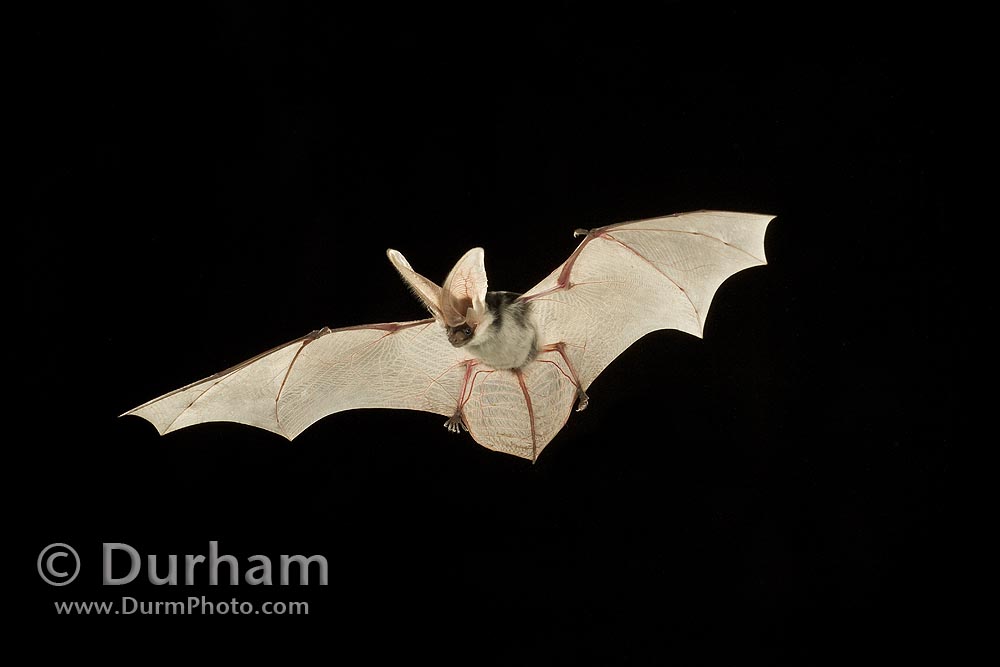


Enjoy little spotted furry flying dudes,

Bp

[all picture credits at Michael Durham's site]

Sunday, April 18, 2010

Sea Lion Crittercam

Some really great crittercam footage of Australian Sea Lions cruising around, and most importantly, attacking large octopi. Bad. Ass.


Enjoy watching animals do their thing,

Bp

Saturday, March 6, 2010

Saturday Morning Awesome: Eagle Owl in Flight

Just fantastic video here of an Eagle Owl landing in slow motion. I have watched it over and over again, just noting how the feathers are moving around.

For the camera geeks in the audience, here is the Youtube writeup:

New Photron SA-2 High Definition High Speed Camera. Shot of 'Checkers' the eagle owl, 1000fps 1920x1080 resolution. Shot by SlowMo (www.slowmo.co.uk). See the owl and other birds of prey at www.turbarywoods.co.uk.


Enjoy watching flight,

Bp

[via Uncle Tom]

Saturday, February 13, 2010

Oarfish are awesome


For the Saturday Morning Awesome this week, I present the first known footage of an Oarfish in its native environs (very deep sea) off the Gulf of Mexico. [BBC doesn't have embeddable video, just click over and it's right there].

From the BBC Earth News Article:

Oarfish (Regalecus glesne) are one of the world's longest fish reaching 17m.

Their strange appearance may have provided the basis for the sea serpent myths told by early ocean travellers.

Not only are they elongated, they also have a prominent dorsal fin which gives it an unusual "serpent" appearance.

Recalling the event Professor Benfield explained how at first, they thought the fish was simply a drilling pipe called a riser being lowered into the water.

"We saw this bright vertical shiny thing, I said 'are they lowering more riser?' as it looked like they were lowering a huge pipe."

"We zoomed in a little bit and we said 'that's not a riser that's a fish!'"


The article has other deep water video provided by the remotely operated submarine they were using in the Gulf of Mexico.

I've mentioned this sublimely bitching creature before, but just to be clear, this blog is a huge fan of these animals.

Enjoy 'monsters' being filmed live and healthy,

Bp

[via my faithful Canukistani operative, Yuri; photo credit at Weird Sea Monsters]

Saturday, February 6, 2010

Epic slow motion frog fail

A quickie post to prove I'm not dead.

See ya'll soon.


Enjoy nature doing its best,

Bp

[via Blame it on the Voices]

Monday, December 28, 2009

Octopi officially deemed 'tool using' animal


Scientists seem pretty loathe to hand out the title 'tool using' to animals. The bar is set pretty high. But these rad cephalopods won the prize fair and square. Not only do they collect coconut shells to use as armor, or portable housing -- but they clean them, and move them, and use them when needed. They even store them.

Awesome.

The article is worth a read.

Enjoy watching animals rock it,

Bp

[via My Lovely Wife, photo credit in linked article]

Wednesday, December 16, 2009

100 days in Glacier National Park

Here is a really awesome photo set from Bostom.com's "The Big Picture."

Part of their writeup:

This summer, Glacier Park Magazine editor Chris Peterson undertook a photographic project to take photos of Montana's Glacier National Park over 100 consecutive days, starting on May 1, 2009, for a traveling photo show in 2010 to commemorate Glacier's Centennial. He used a mix of film and digital cameras, including an 8 by 10 field camera, a Kodak Pocket Vest camera, circa 1909, and a Speed Graphic, among others. His idea was to use the cameras that would have been used over the course of the Park's 100 years.


Here is the whole set of 100 photographs with the artists comments, well worth your time. Some great reading, as well as more amazing shots.

[remember to click images for larger size]

check the foreground right on this one


The beargrass in this one reminds me of my days in the fire lookout.


Bufo! [that one's for you Wife]


[As is this one] Smallest bird in North America, Calliope hummingbird (Stellula calliope)


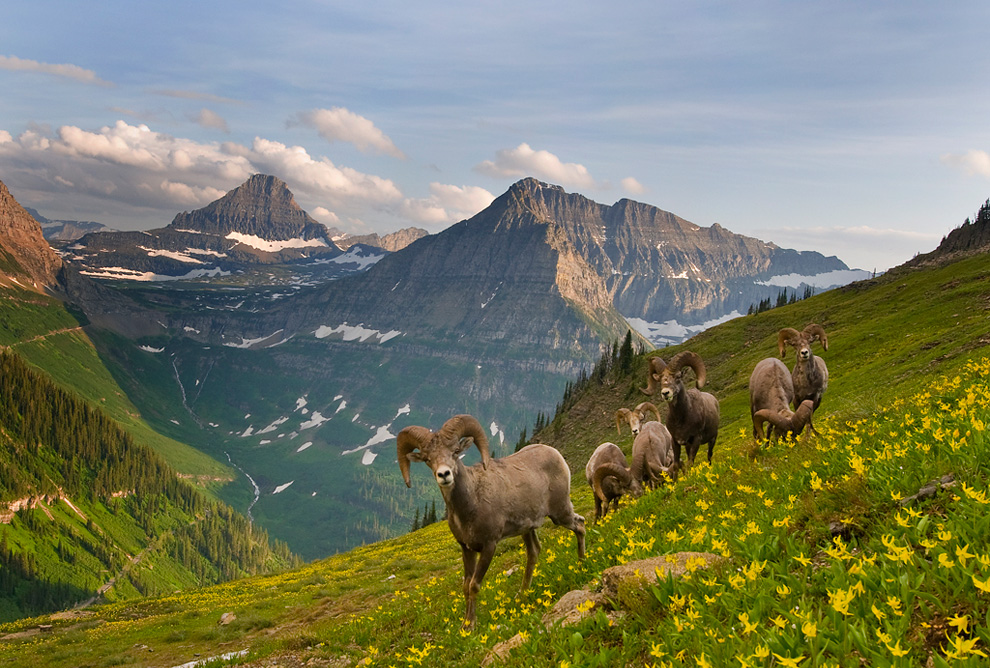
And you gotta have bighorns.


Enjoy phenomenal photography of nearly untrammeled nature,

Bp

[via my faithful Canukistani operative "Yuri", all image credits in linked photo set]

Monday, December 7, 2009

Half inch jellyfish that can take you out, quick

That little guy pictured on the right there can kill you dead, pronto.

Here is the post from Boing Boing, and here is the post they referenced at The Telegraph UK.
The jellyfish's sting can lead to "Irukandji syndrome," a set of symptoms that includes shooting pains in the muscles and chest, vomiting, restlessness and anxiety. Some symptoms can last for more than a week, and the syndrome can occasionally lead to a rapid rise in blood pressure and heart failure.

and
There is no antivenom, and people generally do not realize that they have been stung at first. The initial sting causes little pain, and it may be up to half an hour before a victim starts to feel the effects.

But those effects, Miss Gershwin says, can ultimately be disastrous, with some stings causing blood pressures to soar as high as 280 over 180.

Enjoy never meeting this organism in your whole life,

Bp

[via Boing Boing, photo Wiki Commons]

Friday, December 4, 2009

Time lapse photography of Antarctic giant sea worms and sea stars

Here is our favorite nature narrator, David Attenborough, in a series called "Life" on BBC talking a bit about antarctic scavengers. 3 ft. nemertean worms aren't to be missed.


Enjoy the diversity of wiggling things on our planet,

Bp

[via my faithful Canukistani operative "Yuri"]

Thursday, October 29, 2009

Young woman killed by coyotes in Canada

A young Canukistani folk singer was actually taken out by (at least) a pair of coyotes, and on a popular hiking trail too.

Coyotes attacking people is an extremely rare event. Here is a great page aggregating a bunch of snippets about coyote attacks on humans. A nice quote right from the beginning is that people are millions of times more likely to be injured by a family pet than a coyote.


Bp

[original link via Cynical-C blog]

A real cost of Premarin -- Hormone Replacement Therapy drug


Horse lovers, honestly, just pass this post up.

Folks interested in knowing where your medicines and foods come from -- here's a quick note about Premarin, by Pfizer.

Click quoted text for a Discovery News article about Premarin, horses, and horse rescue (they leave you on an up note in the article, thankfully):

The active ingredients for Premarin—used by around nine million women to relieve menopause symptoms—come from the urine of pregnant horses. The mares are confined to narrow stalls for 20 hours at a time while hooked to collection devices, MSNBC reports. The foals of these mares usually go to auction, where they are often snapped up by bidders known as "horse killers," who send the horses to feedlots. There the animals are fattened before slaughter, according to the report.


Bp

Sunday, October 11, 2009

Japanese honeybees roast a hornet

Japanese honeybees have a very unusual way of killing one of their worst predators, the hornet. They cook them. The bees raise their temperature to 117-degrees and literally roast their enemy. Way too cool. (Sorry for the brief commercial at the beginning).


Enjoy watching nature doing what it takes to get by,

Bp

[via Beebs]

Saturday, October 10, 2009

Saturday Morning Awesome: Grey Fox caught in a camera trap


There is a wonderful blog I follow called Camera Trap Codger, and I saw this post today that really shows the best of the best one can get using a camera trap. Hit this link to see the rest of the pictures. Not only great shots of a photogenic animal, but with a possible storyline/narrative as well.

This, of course, makes me want to run out and get one and set it up. That's what I need -- really, a new hobby. Yeah, with all that time I have.

Enjoy folks following their passions and creating great content for you to enjoy on the intartubes,

Bp

[photo credit Camera Trap Codger blog]

Thursday, October 1, 2009

'You are being shagged by a rare parrot!'

The title says it all. Actually, you have to watch to see the fantastically satisfied "grin" on the parrots face. Really.


Enjoy animals taking it to their scientific benefactors,

Bp

[via Neatorama]

Saturday, September 19, 2009

Tuesday, September 8, 2009

The 6 Most Frequently Quoted Bullshit Animal Facts


Normally, I avoid cussing in the title of a post, but I figured it best to represent the title of this cracked.com article in its entirety.

Many myths challenged in one article. I have to say, I think a little contest for readers of this blog to provide counter information to this article would be fun. See if you can dig up some info to call BS on some of these assertions and post in the comments.

Some examples: Bumble bees violate the laws of aerodynamics, and chameleons change color to camouflage themselves.

Now I'm not taking this comedy website's word as the final, end-all-be-all comment on these subjects, especially considering they didn't take the time to get a picture of an actual Bumble bee as opposed to honey bees for their graphics. I am, however, willing to peruse their research for entertainment purposes.

Enjoy yet more intartube obfuscation,

Bp

Thursday, August 27, 2009

Wild Kingdom in our back yard: Katydid about to get eaten by Miranda


I have a thing with Carnivorous plants. They're just too cool.

Last Mother's Day I sent The Wife to the local Orchid show with some money and said "get something that makes you happy." It was her first Mother's Day after all. She came home with the most amazing plant -- a Nepenthes Miranda Asiatic cobra plant. It's gorgeous.

I must plug Sarracenia Northwest here. They are a local Portland Oregon plant nursery that specializes in carnivorous plants. I'm happy they had a display at the Orchid show so the wife could run into this impressive plant. If you ever had an itch to get a carnivorous plant, click that link and see just how much variety and information they provide.

So -- on to the video.

Today when I came home for lunch I saw a bright green leaf on one of the pitchers. Then I saw it move. I got closer and saw that it was a Katydid. I've never seen one in our area so Miranda did quite a job of luring him in from who-knows-where. Amateur video to follow.


And the video in which I find out my flip camera software has no "rotate left" option in its edit options. Sorry 'bout that, but I'm posting it anyway.


Enjoy beautiful plants eating bugs,

Bp


[photograph via Petflytrap]

Friday, July 3, 2009

Ant mega-colony takes over world


Ok, I lifted that blog title directly from the BBC Earth News article, but it was so awesome I felt I had to.

The Institute of Jurassic Technology does tend to talk about the whole invasive/non-native situation in biology. It's an interest of mine. So this article really caught my attention -- as Argentine Ants are spreading world-wide, reaping havoc on local bug populations, like the Reavers of the insect world.

On to the study. In short, researchers pitted ants from different colonies around the world against each other in single ant-on-ant combat. This, of course, was couched in the guise of research but we all know it's exactly the same as fighting spiders in the schoolyard in dixie cups.

The ants from the largest colonies around the world refused to fight. They rubbed antennae and acted like old buddies. Meaning -- they are from the same colony.

This is intense, because that means that this is probably the largest expansion of one cooperative species on Earth outside Humanity itself.


Like humans, Argentine ants show a wide diversity and adaptability in their diet. According to this UC San Diego paper, they switch from being vicious predators to "farmers" of aphids and scale bugs once they are established.

Genius! Come in strong, settle down and start farms. Sound familiar? Like -- oh ancient Rome maybe?

Go Ants!

I mean -- how terrifying.

Enjoy seeing other species succeed using human-like tactics, even if it is kinda evil,

Bp

[via my faithful Canukistani operative "Yuri," photo credit in BBC Earth News article]

Saturday, June 27, 2009

Saturday Morning Awesome -- Flamboyant Cuttlefish


Cuttlefish are one of the more awesome animals on the planet. So, for the Saturday Morning Awesome, I figured a quick video of the Flamboyant Cuttlefish (Metasepia pfeferri) would fit the bill. This versatile subject matter counts as a "Little Dudes" post, a Random Biological Tidbits post, and a Saturday Morning Awesome as well. Efficient, no?

Here is some info from The Cephalopod Page:

Metasepia pfefferi is found in shallow (3 to 86 m) waters from Indonesia, to Papua New Guinea to the north shore of Australia, South Queensland to Western Australia. They are typically found ambling along (see below) on mud, sand or low energy coral rubble bottoms.

In the summer of 2006 three of us, the founders of MarineBio.org headed to Indonesia. I was there for three weeks specifically to observe and photograph cephalopods. During this trip, despite many dives, I was able to find and photographed only two of these amazing animals.

These remarkable cephalopods are active during the day. They slowly “walk” across the seafloor using their arms and flaps on their mantle; this type of locomotion has been called “ambling”. Normally camouflaged, the beautiful colors that give this cephalopod its common name are warning colors and are displayed when the animal is disturbed, See this video. Recently, scientists discovered that these warning colors are not a bluff, the animal is indeed toxic.


Enjoy awesome, smart, toxic little dudes,

Bp

[via Estu, photo credit at the Cephalopod Page]

Thursday, May 21, 2009

The most probable Colony Collapse Disorder culprit yet


So that last post I made about a possible CCD agent is on pretty thin ice, it turns out. This pesticide, however (imidacloprid) looks very seriously like a possible cause. In this Salon.com article, they present some pretty compelling information.

Bayer CropScience, the producer of both imidacloprid and another suspect pesticide clothianidin, doesn't want you to think this, however. They've got big money on the association between CCD and their products just going away.

Although I can't say that case connecting these pesticides and CCD is waterproof, it sure deserves a WHOLE LOT of attention.

Enjoy possibly finding the solution to a problem with one of our most important agricultural animals,

Bp

[image credit in linked article]